
Module 1: Planning and Capturing Content on Your Phone
1.1 Finding Content Ideas Your Zambian Audience Actually Wants
What You Will Learn
By the end of this lesson you will be able to identify what your audience cares about, brainstorm content ideas that match their daily lives, and plan a simple content calendar so that you never run out of things to post.
Why Content Planning Matters
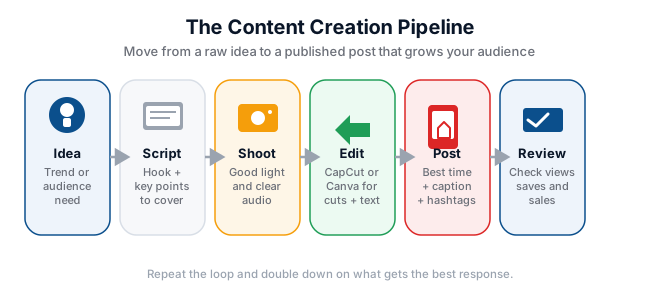
Many people start creating content by opening their phone, taking a random photo or video, and posting it immediately. This often leads to low views, few likes, and frustration. The creators who grow are the ones who plan. They know what their audience wants, they prepare ideas in advance, and they post with purpose. Whether you are a market vendor in Kalomo wanting to show your fresh tomatoes, a hairdresser showcasing braids, or a student sharing study tips, planning helps you stand out in a crowded feed.
Understanding Your Audience
Your audience is the group of people you want to reach. In Zambia, most social media users are on Facebook, TikTok, and WhatsApp. They use phones with limited data bundles, so they prefer short, useful, or entertaining content. They relate to real situations: load-shedding, high transport costs, finding affordable school uniforms, cooking on a budget, or juggling a side business with a full-time job.
Before you create anything, ask yourself these questions:
- Who am I trying to reach? (School leavers, parents, business owners, farmers?)
- What problems do they face every day?
- What would make them stop scrolling and pay attention?
- What language do they use? (English, Nyanja, Bemba, Tonga, or a mix?)
Types of Content That Work Locally
Here are content formats that perform well with Zambian audiences:
- How-to tutorials — "How to style a chitenge skirt in three ways" or "How to check your NAPSA contributions on your phone."
- Behind-the-scenes — Show how you prepare your market stall at 5 a.m., how you braid hair, or how you bake buns for sale.
- Before and after — Transformations sell. A dirty plot turned into a vegetable garden, a plain room decorated on a budget, or a student desk organised for exams.
- Day-in-the-life — Follow a nurse, teacher, shopkeeper, or farmer through their day. People love real stories.
- Tips and hacks — "Three ways to make your Airtel data last longer" or "How to keep tomatoes fresh for one week without a fridge."
Worked Example: Planning a Week of Content for a Chicken-Rearing Business
Mrs Tembo runs a small chicken-rearing business in Kalomo and wants to attract customers who buy live chickens and eggs. She plans one week of content:
| Day | Content Idea | Format |
|---|---|---|
| Monday | Show the chicks arriving at her home | 30-second video |
| Tuesday | Tip: "How I keep my chickens healthy without expensive medicine" | Photo + caption |
| Wednesday | Behind-the-scenes: Feeding time | Reel/TikTok |
| Thursday | Customer review: A neighbour talks about the quality of her eggs | Video testimonial |
| Friday | Price list for chickens and eggs with contact details | Canva graphic |
| Saturday | Day-in-the-life: From morning feeding to evening counting of sales | Photo carousel |
| Sunday | Rest or repost the most popular post from the week | Reshare |
This plan mixes education, trust-building, and sales. Mrs Tembo never runs out of ideas because each day has a clear purpose.
Try It Yourself
- Choose a business or interest you have. It could be selling clothes, cooking, farming, tutoring, or even your college course.
- Write down three problems your audience faces related to that topic.
- Brainstorm five content ideas that solve those problems or entertain your audience.
- For each idea, decide whether it will be a photo, video, graphic, or text post.
- Draw a simple table with five days and place one idea on each day. This is your first content plan.
Key Terms
- Audience — the group of people you want to reach and influence with your content.
- Content calendar — a simple schedule that tells you what to post and when.
- Behind-the-scenes — content that shows the real work and process behind a finished product or service.
- Testimonial — a video or written review from a happy customer that builds trust.
- Carousel — a social media post with multiple images that viewers swipe through.
Summary
Great content starts with understanding your audience and planning ahead. Instead of posting randomly, think about what your audience needs, choose formats they enjoy, and organise your ideas into a simple calendar. A well-planned week of content will always outperform a random post, because it shows purpose, consistency, and care.